Figuring Out Roof Pitch: Check an Unusual Reading
Measure vertical rise and horizontal run in matching units, then calculate (rise ÷ run) × 12. The result is the rise in the standard x:12 pitch format—even when it is a decimal such as 5.75:12.
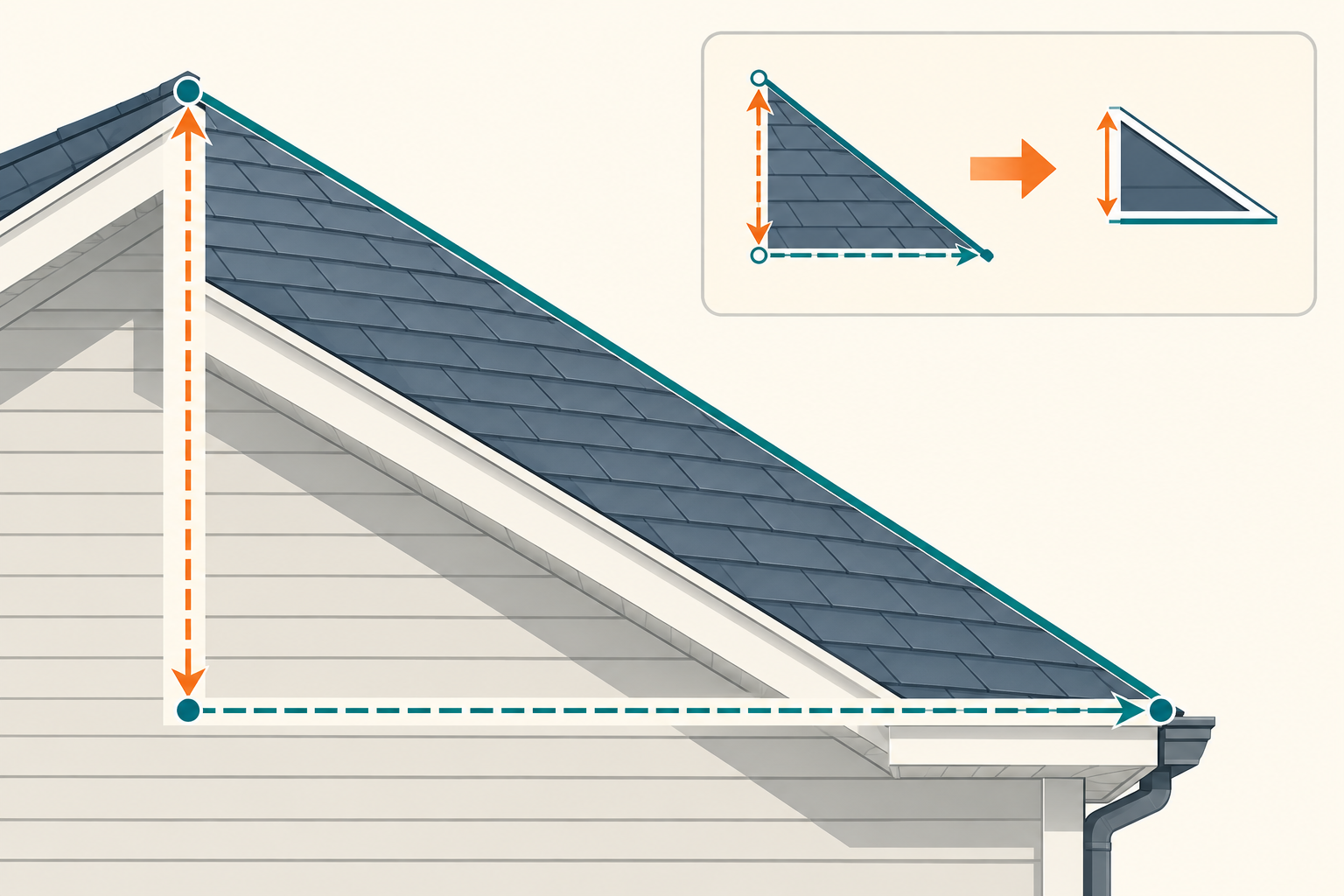
How to calculate an unusual roof pitch
An unusual result is not a different kind of calculation. Use the actual vertical rise and actual horizontal run from one roof plane, then scale that ratio to 12. Do not replace horizontal run with the sloped roof surface or round the measurements before calculating.
pitch = (rise ÷ run) × 12Write the answer as x:12.angle = atan(rise ÷ run)Use when you need degrees.Worked example: a decimal x:12 pitch
Suppose the vertical rise is 11.5 inches over a 24-inch horizontal run. The calculation is (11.5 ÷ 24) × 12 = 5.75. That roof pitch is 5.75:12. It is more precise to retain that result than to silently turn it into a whole-number pitch.
If a drawing or app reports a rise/run ratio instead, multiply the ratio by 12 to obtain the same x:12 representation. Always keep the input units consistent.
Three checks before trusting the result
- Confirm that the rise was measured vertically and the run was measured horizontally.
- Measure the same roof plane again if the surface is irregular or the reference moved.
- Keep the unrounded reading with the measurement notes so another person can repeat the calculation.
These are geometry checks. This page does not decide roofing material suitability, structural details, drainage design, or local requirements.
Figuring out roof pitch FAQ
How do I calculate an unusual roof pitch?
Divide measured vertical rise by measured horizontal run, then multiply by 12. A result such as 5.75 is written as 5.75:12; it does not need to be forced into a whole-number label to be useful.
Can I measure with metric units?
Yes. Use the same unit for rise and run, divide them, and multiply by 12. The final x:12 notation is a ratio, so matching millimetres, centimetres, metres, inches, or feet produce the same slope.
Why does my result not match the nearest common pitch?
Your roof may not use a whole-number x:12 ratio, or one of the measurements may need to be repeated. Keep the calculated ratio first; only round when a task explicitly calls for a stated precision.
Editorial question addressed: “How to calculate an unusual roof pitch?” (source and date were not provided in the site roster). The answer above is an original geometry explanation.