Roof Pitch Calculator: Slope vs Pitch Check
Before comparing two roof calculator results, record the convention each one uses. A one-plane rise/run value and a value described with full-span pitch wording can refer to different horizontal baselines.
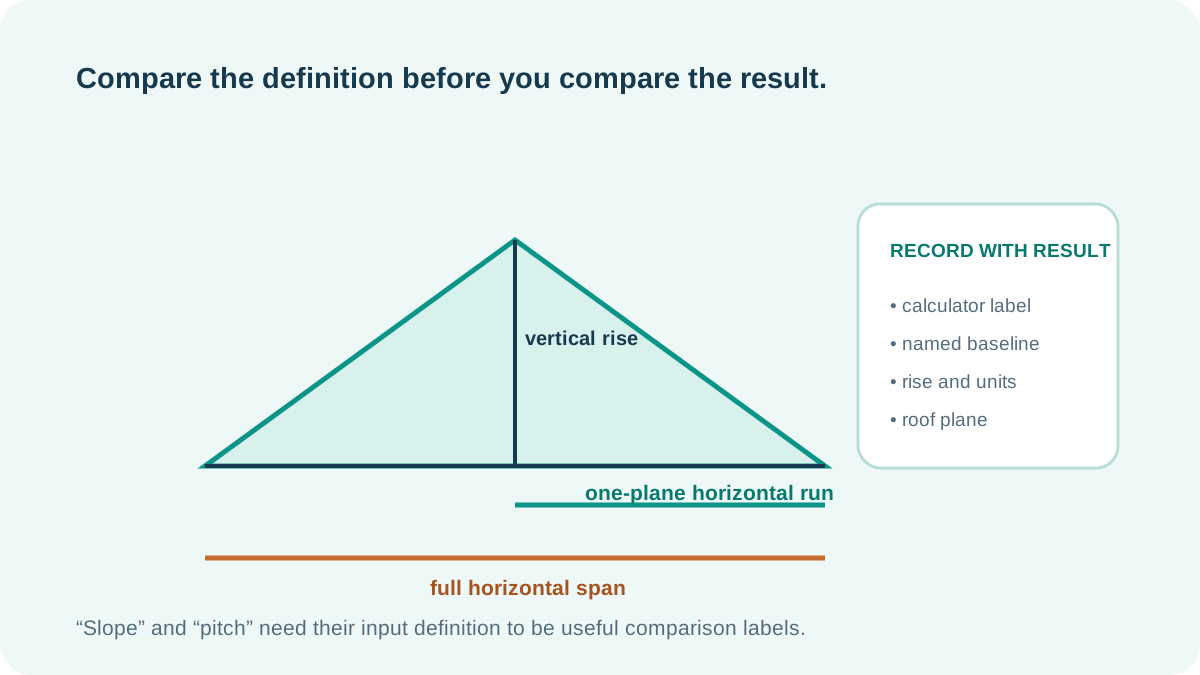
Name the horizontal reference
Roof calculators commonly begin with vertical rise and horizontal run for one roof plane. A field note or another tool can use the word pitch differently, especially when it describes a full gable span. The words alone do not prove that two displayed ratios use the same horizontal distance.
That is why a result record should include the exact input labels, not only the final number. Write whether the horizontal value was a one-plane run, a full span, or another clearly measured baseline.
rise / horizontal run
Label the roof planerise / full span
Do not compare blindlyCompare the input definition before the output
If two notes appear to disagree, return to their input definitions first. Confirm the same roof plane, the same unit basis, and the same horizontal reference. Only then is a direct comparison meaningful.
Record rise and the named horizontal reference beside every result.
Check what that calculator means by its slope or pitch field.
Use matching definitions before deciding two notes conflict.
Can a calculator result settle the terminology by itself?
No. A result transforms the inputs it receives. The calculator result alone does not reveal whether another record used the same definition of the horizontal measurement.
This check keeps measurement language auditable. It does not verify the field measurement, roof symmetry, structural layout, material suitability, or approval.
Method and scope
- Original calculator logic, informed by the existing RoofSnap terminology review in this workspace. This page introduces no product, construction, or regulatory claim.
This is an original calculator-record guide, not a structural layout or construction approval.